Emerging Education Patterns Spotlighted by Google in Education Sector
In the ever-evolving landscape of education, educators are being encouraged to adapt and evolve in order to prepare students for a world where change is the only constant. This shift is being driven by a global study on the future of education, conducted by Ipsos via the online platform Global Advisor, involving 30 countries across the globe.
The study, which included Germany, Argentina, Australia, Belgium, Brazil, Chile, France, the UK, India, Indonesia, Ireland, Italy, Japan, Canada, Colombia, Malaysia, Mexico, Netherlands, Peru, Poland, Romania, Sweden, Singapore, Spain, South Africa, South Korea, Thailand, Turkey, Hungary, and the USA, predicts that as many as half the children born today living in some countries will live to be 100. This longevity underscores the importance of a lifelong learning pursuit.
The World Economic Forum has identified skills with growing demand for employers, including analytical thinking, innovation, active learning, complex problem-solving, critical thinking, and creativity. To prioritize these skills, teachers can incorporate real-world situations into lessons and adopt teaching approaches like project-based learning and phenomenon-based learning.
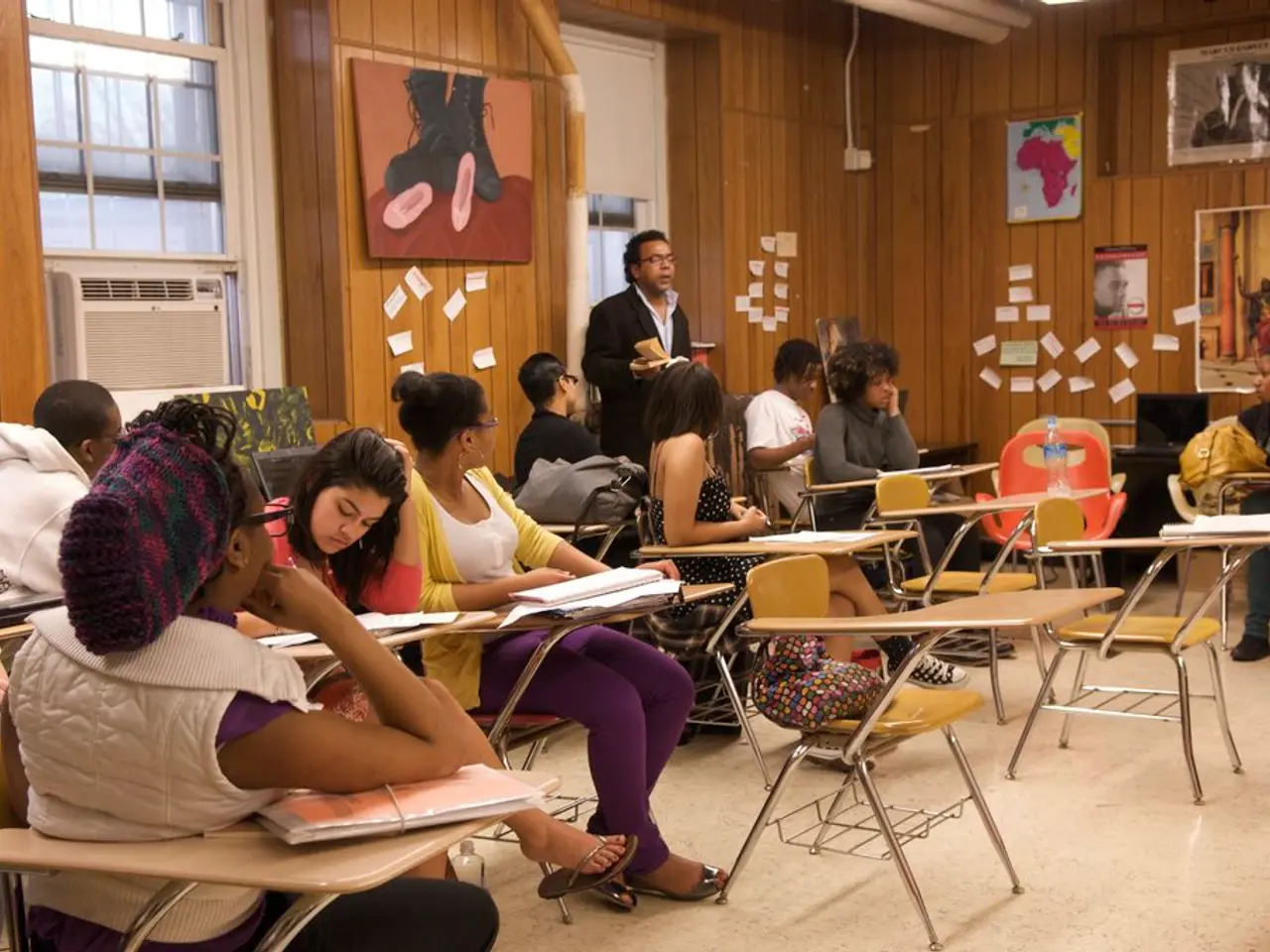
One educator leading this charge is Magiera, who invites guests with diverse career paths into her classroom. Recent guests have included an architect and a New York Times bestselling author. Magiera's sister, Kat Cho, is a New York Times bestselling author who began her career as a cancer researcher. Her journey underscores the importance of a growth mindset that encourages change and adaptability.
The tech industry is also projected to see a net gain of 12 million jobs, emphasizing the need for a strong focus on technology skills. For educators, this means continuing to learn new skills during their career and helping students realize that learning is a lifelong pursuit.
Google for Education's report calls for expanding the learning span as the lifespan increases. By prioritizing skills like those identified by the World Economic Forum, educators can help students navigate the complexities of the future with confidence and adaptability. The future of education is about preparing students not just for the world as it is today, but for the world as it will be.
Read also:
- Experiencing Life's Variety Firsthand: Gaining Insights from Life's Broad Spectrum of Experiences
- Impact of Complex Post-Traumatic Stress Disorder on Romantic Relationships: Symptoms, Causes, and Precautions
- Andrew Stunell joins in celebrating equality with graduates from a pioneering mentorship program.
- Budget Alterations Made to 2023 Toyota GR Corolla After 4,500 Miles, with a Cost of $38 for Smoothing Out the Rough 1-2 Shift